
As the opening year of the "15th Five-Year Plan" in 2026, national and local governments have intensively issued policies in the security sector, ranging from top-level planning to detailed standards, and from public safety to consumer livelihood, comprehensively outlining the development blueprint for the security industry over the next five years. The core direction of these policies is clear: leveraging artificial intelligence, the Internet of Things, and big data as the technological foundation to drive the transformation of security systems from "passive response" to "proactive early warning," while incorporating smart security into the new track of digital consumption, unlocking a trillion-yuan civilian market space.
Top-level planning sets the tone: intrinsic safety and resilient cities become core keywords
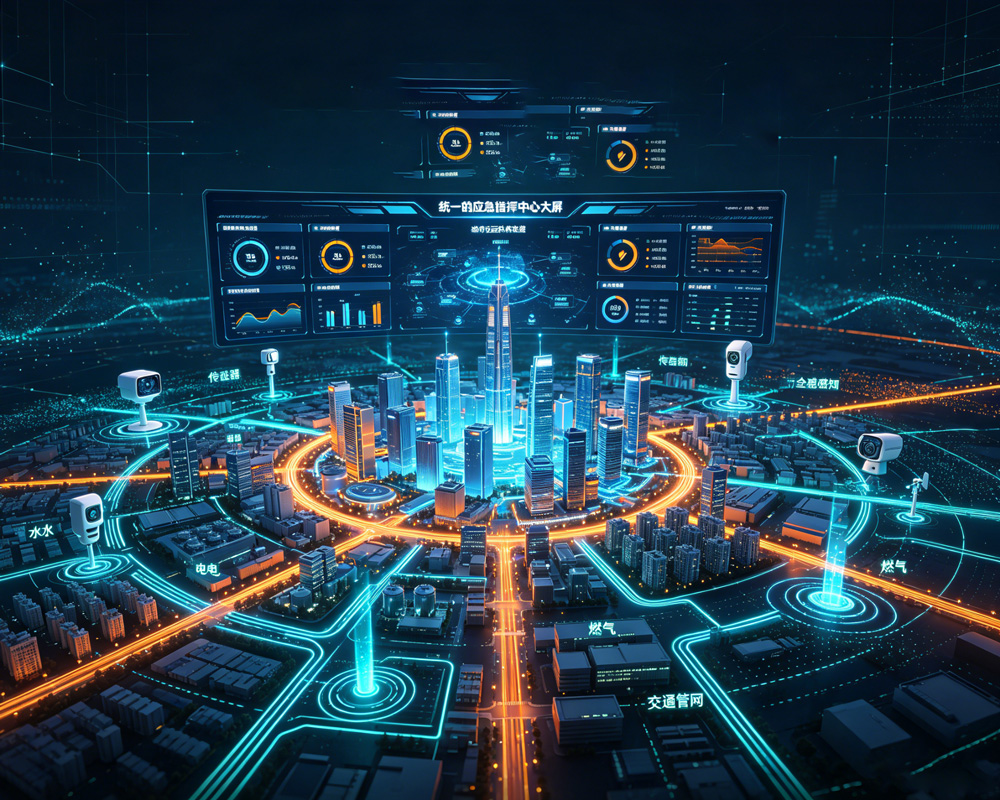
The "Recommendations of the Central Committee of the Communist Party of China on Formulating the 15th Five-Year Plan for National Economic and Social Development" explicitly proposes "enhancing the intrinsic safety level of critical infrastructure," emphasizing the elimination of safety hazards at the source. In June 2026, the State Council issued the "15th Five-Year Plan for the Construction of a Modern Emergency Response System," making systematic arrangements for work safety, disaster prevention, mitigation, and relief. During the same period, multiple regions including Shanghai and Chongqing released special 15th Five-Year plans for resilient and safe city construction. Shanghai specifically launched an "Artificial Intelligence (AI)+" initiative for resilient and safe city construction, proposing the establishment of an integrated air-space-ground ubiquitous perception network and the improvement of the "one-network unified management" urban operation sign indicator system.
Industry analysts point out that during the "15th Five-Year Plan" period, security construction is no longer limited to traditional video surveillance and access control systems, but is upgrading to a three-dimensional security system featuring ubiquitous perception, intelligent early warning, and collaborative response. Chongqing has proposed achieving basically full coverage of IoT sensing equipment and monitoring systems for major municipal infrastructure, while Shanghai is advancing the construction of multi-hazard early warning intelligent agents, both reflecting this policy orientation.
Consumer-side breakthrough: smart security included in digital consumption key cultivation for the first time
Notably, the "15th Five-Year Plan for Expanding Consumption" approved by the State Council includes smart security and video care systems in the new-generation intelligent terminal system for the first time, placing them alongside consumer livelihood products such as smart wearables and service robots, formally establishing the digital consumer product category attribute of smart security. This top-level policy adjustment breaks the traditional market structure dominated by government-enterprise projects and commercial supporting facilities, driving the industry to fully transform from essential safety equipment to consumer livelihood products and experience service carriers.
According to predictions from industry research institutions, driven by policies, the civilian smart security market will usher in explosive growth, with home security upgrades, low-cost deployment for small and medium merchants, and large-scale procurement in rural and outdoor scenarios becoming the three core growth drivers, with a compound annual growth rate expected to exceed 18%.
Technology and compliance dual-driven: AI becomes standard, data security becomes a rigid requirement
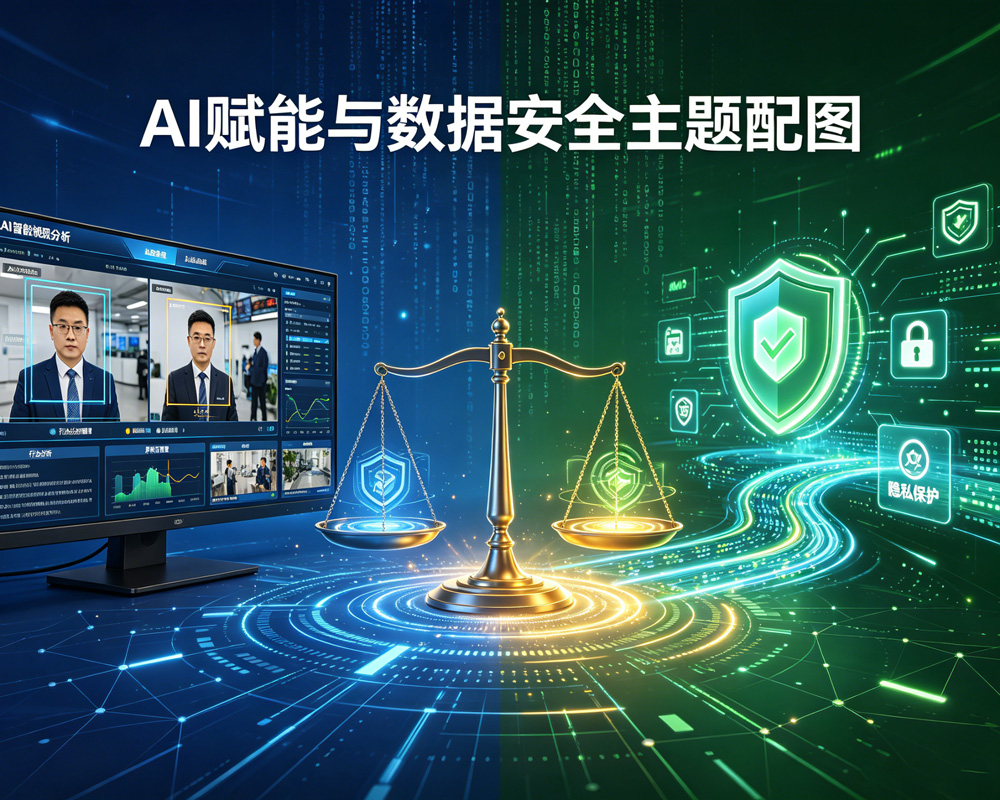
In the first half of 2026, industrial policies jointly issued by multiple ministries formally established AI and the Internet of Things as core capabilities of security infrastructure. Documents such as the "Special Action Implementation Opinions on 'AI + Manufacturing'" issued by eight departments promote the "brain-equipped upgrade" of smart security, bidding farewell to the traditional "bare surveillance" model. Meanwhile, the "Regulations on the Administration of Public Security Video Image Information Systems" has been deeply implemented, explicitly requiring that public area video image information systems meet dual standards of data security and privacy protection, imposing rigid requirements in areas such as video encryption, leak prevention, and trusted authentication. As of July 2026, more than 20 provinces across the country have initiated the construction of video security supervision platforms.
Standards in segmented fields are also accelerating. The "Technical Requirements for the Construction and Networking of Self-Monitoring Video Surveillance Systems for Pollutant Discharge Units" (HJ1480-2026) issued by the Ministry of Ecology and Environment will be mandatorily implemented on October 1, 2026. This is China's first unified national standard for self-monitoring video surveillance of pollutant discharge units. Leading enterprises such as Hikvision and Dahua Technology have successively released specialized solutions within one week, and the application scenarios of the security industry continue to extend into environmental protection, industry, and other fields.
Enterprise opportunities: weak-current intelligent system integrators embrace a policy dividend period
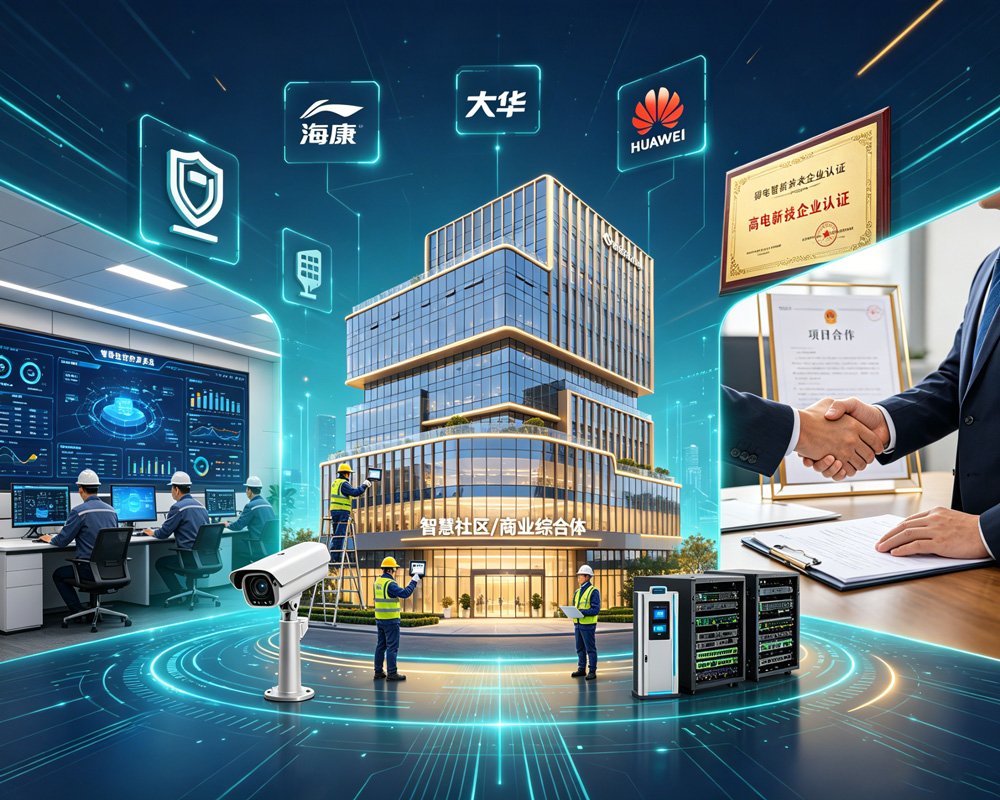
Driven by policy dividends, enterprises with weak-current intelligent system integration capabilities and AI and IoT technology foundations are facing significant development opportunities. Taking Shaanxi Yunong Yunzhi Intelligent Technology Co., Ltd. as an example, as a subsidiary of Yunong Technology Group (stock code: 834487), Yunzhi Company focuses on the weak-current intelligent field, with business covering the design, installation, commissioning, and operation and maintenance of communication, security, fire protection, building automation, and smart home systems. It has established cooperation frameworks with leading equipment suppliers such as Hikvision, Dahua, and Huawei, and has implemented a full-domain intelligent security system in the Zijun Tianxi Smart Digital Community project, including AI video surveillance, facial recognition access control, perimeter protection, and fire linkage modules. In 2025, it was successively recognized as a Shaanxi Province science and technology SME and a high-tech enterprise.
Industry insiders state that during the "15th Five-Year Plan" period, the security industry will present three major trends: first, deep AI empowerment in technology, upgrading from "seeing" to "understanding and early warning"; second, market expansion from public safety to multiple scenarios such as consumer livelihood and industrial environmental protection; third, data security and privacy protection becoming rigid thresholds in compliance. Enterprises with system integration capabilities, technical R&D strength, and compliance service capabilities will occupy a favorable position in the new round of industry transformation.