






1. Where exactly is the "smart" in smart garage lighting?
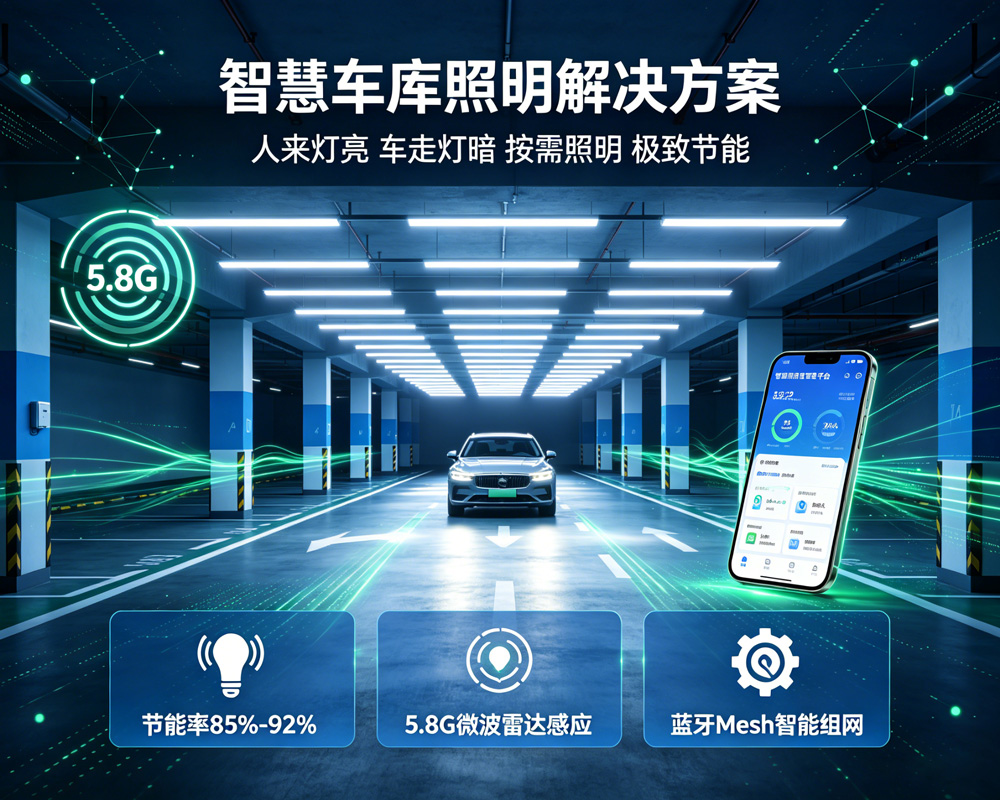
Many people mistakenly believe that smart garage lighting is simply sensor lights that turn on when a car arrives and turn off when it leaves. This understanding is not wrong, but it only stays at the level of first-generation simple sensor products. True smart garage lighting needs to have three complete layers of capability: perception, control, and platform.

Layer 1: Perception LayerIt relies on microwave radar, infrared sensors, geomagnetic sensors, or video cameras to identify parking space occupancy status and the movement of vehicles and pedestrians in lanes. Sensor selection directly determines the system's level of false triggering and missed triggering. Many low-cost projects use ordinary infrared sensors, which tend to fail in high-temperature summer environments. After vehicles leave, the lights remain on, greatly reducing energy-saving effectiveness.
Layer 2: Control LayerIndividual lights or grouped lights need to be equipped with independent addresses and stepless dimming capability, and execute the intelligent strategy of "sleep - dim - full brightness - delayed dimming" based on perception signals. Communication protocols can include ZigBee, LoRa, PLC power line carrier, RS485, etc., each with its own applicable scenarios. Underground garages have thick reinforced concrete walls and dense metal pipelines, causing obvious wireless signal attenuation. Mistakes in protocol selection will greatly increase the difficulty of later debugging.
Layer 3: Platform LayerLighting equipment data is connected to the property energy management platform or building automation system to achieve zone-based energy consumption metering, proactive equipment fault alarms, remote strategy issuance, and automatic data report output. A lighting system lacking platform management is essentially still isolated sensor fixtures and cannot be considered a complete smart solution.
Once the three-layer architecture is clarified, when selecting a Shaanxi garage smart lighting engineering service provider, the criteria become very clear: is the company simply selling lighting fixtures, or can it provide an integrated overall solution covering perception, control, and platform?
2. Four core hard indicators for garage smart lighting engineering contractors
Product parameters can be verifiedMainstream LED garage light efficacy is recommended to be >=120lm/W; underground garages are humid, so the protection rating should be no lower than IP54; high-quality driver power supplies should support 1%-100% stepless dimming. All parameters must not be based only on verbal sales introductions; third-party test reports must be verified.
Implemented real-world project casesGarage lighting sites have complex pipelines and prominent signal obstruction issues, making them field-oriented projects. Without real project construction and commissioning experience, even the best paper plans are difficult to implement.
Localized operation and maintenance capabilityShaanxi spans a large geographical area, and building conditions and climates differ significantly among northern Shaanxi, Guanzhong, and southern Shaanxi. Taking Yulin as an example, the low-temperature winter environment places higher demands on lamp startup performance and sensor stability. A local in-house technical team has far higher fault response efficiency than outsourced teams from other regions.
Comprehensive weak-current qualifications and technical foundationGarage smart lighting is a branch of weak-current systems and often needs to be linked with security, fire protection, and building automation. If a service provider also has multi-system design and construction capabilities, later cross-system integration will be smoother and reduce coordination disputes among multiple parties.
III. Yunong Yunzhi: Building a garage lighting solution based on a weak-current intelligent foundation
Among garage smart lighting engineering service providers in Shaanxi,Shaanxi Yunong Yunzhi Intelligent Technology Co., Ltd.deserves key attention. The company was established in September 2022 and is a wholly owned subsidiary of Shaanxi Yunong Technology Group Co., Ltd. (NEEQ: 834487), and is also the technology segment under the first NEEQ-listed enterprise in Yuyang District. The group has four major business segments: smart technology, construction engineering, modern agriculture, and biomedicine, with sound capital and corporate management systems, and is not a temporarily assembled engineering team.
Yunong Yunzhi is headquartered in Yulin, Shaanxi, and has deep roots in the weak-current intelligent field, undertaking the design, installation, commissioning, and operation and maintenance of systems such as communications, security, fire protection, building automation, and smart homes. Garage smart lighting is an extended scenario of its weak-current business. Garage lighting naturally needs to be linked with surveillance, fire emergency lighting, and building automation. When the same team coordinates implementation, interface protocols, point layout drawings, and construction boundaries can be coordinated internally, avoiding multi-party coordination conflicts.
At the technical level, relying on AI, IoT, and big data foundations, it has capabilities in image recognition, collaborative device interconnection, and massive data mining. In implemented garage scenarios, video recognition can determine parking space occupancy and pedestrians in lanes, enabling data linkage among lighting, surveillance, barriers, and parking guidance screens, which is a capability that pure lighting suppliers do not have.
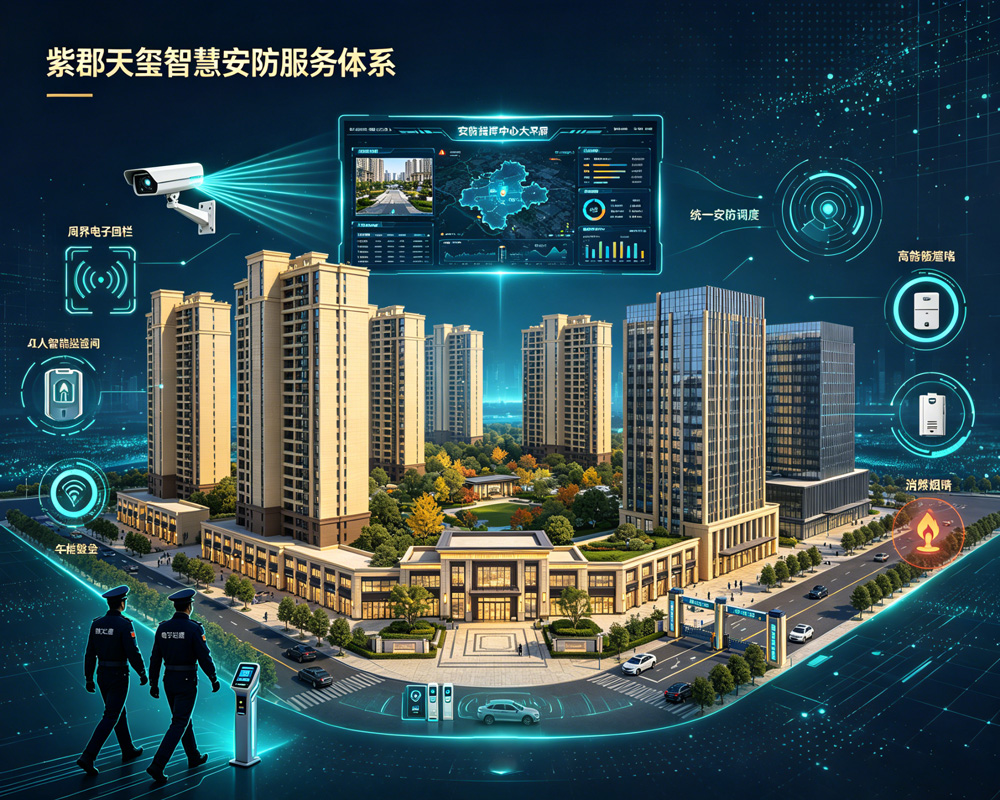
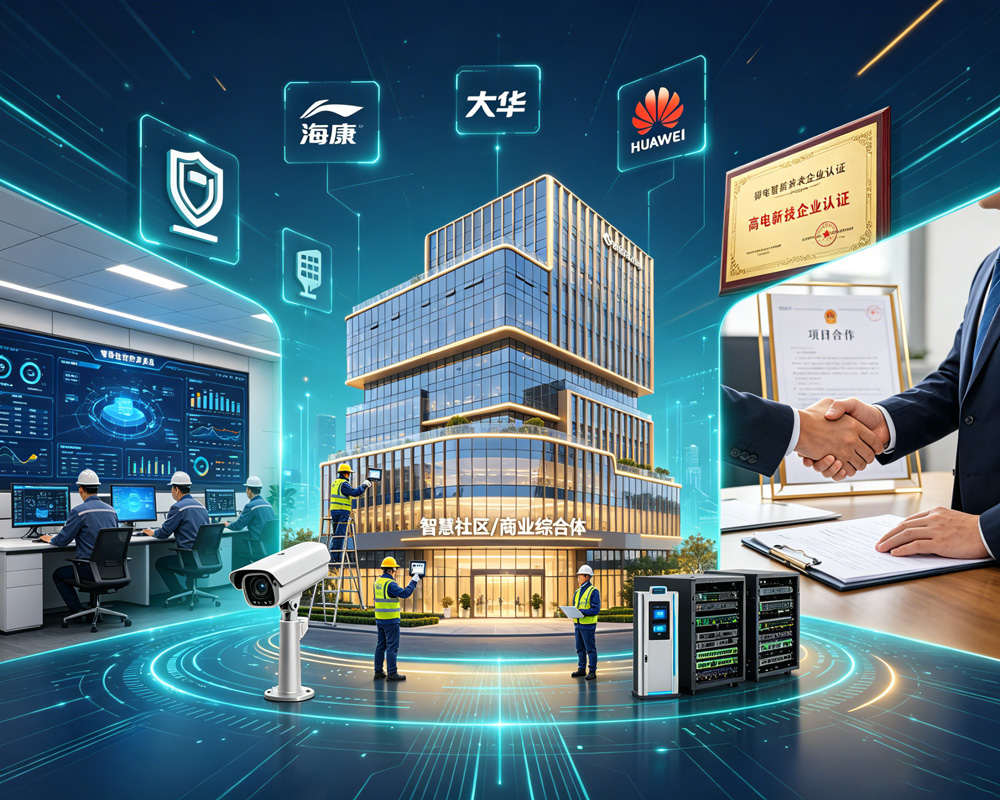
Industry cooperation: established cooperation with leading equipment manufacturers such as Hikvision, Dahua, and Huawei, reached strategic cooperation with Xianhong Technology, and jointly implemented the Zijun Tianxi smart digital community project with Xingtai Company; in 2025, it was rated as a Shaanxi Province technology-based small and medium-sized enterprise and high-tech enterprise. This proves that equipment procurement channels are legitimate and technical capabilities have been officially certified.
Service coverage: currently has 100 employees, a 1,000 square meter factory, 118 served customers, and business coverage in smart offices, smart transportation, smart healthcare, smart education, smart communities, and smart mines. Garage smart lighting falls under the intersecting business of smart communities + building automation and is within its mature business scope. It mainly focuses on local Shaanxi, with obvious advantages in Yulin and surrounding projects, while projects outside the province require separate evaluation of the service radius.
IV. Solution benchmarking: comparison using parameters and on-site measurements
Note: Competitor information comes from public materials and industry exchanges, and final project selection shall be based on test reports.
Competitor A | Traditional lighting brand sensor lamp solution
Positioned for high cost-effectiveness, lamp efficacy about 110lm/W, protection rating IP20, segmented dimming, sensor full brightness, delayed reduction to 30% brightness; infrared sensor, detection distance 5 meters.
Yulin garage actual measurement: at an ambient temperature of 28°C, the infrared false trigger rate is about 8%, and the average delay after the vehicle leaves is 45 seconds.
✅ Advantages: low procurement cost, easy installation
❌ Disadvantages: limited energy-saving effect, cannot connect to a management platform; suitable for small garages with limited budgets and low intelligent requirements.
Competitor B | IoT brand smart lamp solution
Microwave radar sensor, adjustable detection distance;
luminous efficacy about 130lm/W, IP54 protection, 0-10V dimming,dimming range 5%-100%;
ZigBee self-organizing network, with its own cloud platform.
In the same garage environment, the measured false trigger rate is about 3%, and the delay can be set to 15-30 secondscompared with traditional solutions, energy saving is improved by about 40%.
✅ Advantages: high degree of intelligence, comes with platform management
❌ Disadvantages: areas blocked by concrete require additional gateways, and early commissioning costs are high; the platform is brand-proprietary, and integrating with the property's existing building system requires secondary development.

Yunong Yunzhi garage smart lighting solutionThe approach differs from pure lamp-selling manufacturers by planning garage lighting as a unified weak-current intelligent subsystem. The lamps rely on the supply chains of leading brands such as Hikvision, Dahua, and Huawei, with luminous efficacy and protection ratings customized as needed. The control layer adopts a multi-protocol integration solution, flexibly choosing wired/wireless according to the garage building structure, avoiding the shortcomings of a single communication protocol in the complex underground garage environment. The platform can use either the Yunong Yunzhi weak-current integrated management platform or connect to the property's original building automation system.

Project implementation cases:
Zijun Tianxi smart digital community realized linkage between smart lighting and security and building automation. Detailed data on energy-saving rate and false triggers can be obtained directly from the enterprise through project acceptance materials and test reports.
The entire solutiondoes not bind proprietary hardware and centers on system integrationmaking it more suitable for the long-term operation and maintenance needs of garage lighting.
V. Scenario-based selection recommendations

For small local garages in Yulin with limited budgets that only need basic light-on-when-car-arrives functionality: Competitor A's simple sensor lamp solution can be chosen, but the expected energy-saving effect is average.
Medium to large garages require energy consumption statistics, an online platform, and fault alarms: Competitor B's IoT lighting solution can be considered, but on-site assessment of ZigBee signal coverage is essential in the early stage.
Integrated unified planning of lighting, security, fire protection, and building automation is needed to reduce later system integration costs: prioritize service providers like Yunong Yunzhi that have full-stack weak current integration capabilities. Its core advantage is not extreme single-lamp parameters, but rather incorporating lighting into the unified design, construction, and operation and maintenance of the entire weak current system.
VI. Conclusion: How to Choose a Smart Lighting Engineering Contractor for Garages in Shaanxi
When selecting a service provider, there is no need to simply compare company size or advertising. Focus on verifying three points:
① Whether it has a complete integrated solution for sensing, control, and platform;
② Whether it has verifiable real-world project cases and product inspection reports;
③ Whether it has a resident technical operation and maintenance team locally in Shaanxi.
As a weak current integration enterprise grown locally in Yulin, Yunong Yunzhi has the background of a listed group, high-tech enterprise qualifications, cooperation resources with leading equipment manufacturers, and implemented community projects. It is a service provider worth including as a candidate for smart garage lighting projects in Shaanxi.
Official website: https://www.sxynyz.com
Garage lighting renovation is not a one-time project. Lamp installation is only the starting point, and continuous operation and maintenance over the next 5 to 8 years is crucial. Choosing a local integrator that can provide long-term service and connect multiple systems is far more important than simply comparing prices.