









I. System Positioning
The electronic patrol system is the "post supervisor" and "patrol check-in device" of the security system. Its core mission isto make security patrols "fully covered, effectively prevented, and traceable"— By standardizing patrol routes, enforcing fixed-point check-ins, and recording patrol tracks in real time, it ensures full coverage of key areas and assigns duty responsibility to individuals. The system upgrades traditional "relying on self-discipline for attendance" to fully digitalized tracking of "whether patrolled, whether arrived, and when arrived," making it an important management tool for property management, park security, and security performance assessment.
II. Equipment Composition and Functions
| Equipment | Core Function | Selection Key Points |
|---|---|---|
| Patrol Wand (Patrol Device) | A collection terminal carried by patrol personnel, reading patrol points and recording time | Handheld patrol wand; supports inductive / contact card reading; waterproof and drop-resistant; large storage capacity; optional real-time transmission (GPRS/4G) and GPS positioning |
| Patrol Point (Information Button) | Positioning markers installed along patrol routes, equivalent to "electronic check-in points" | Waterproof and tamper-resistant information buttons / electronic tags; installed at key locations such as walls, warehouses, fire escape routes, and equipment rooms; no power supply, no wiring, and no maintenance required |
III. Core Functions
Standardized patrol route management— Security supervisors can set patrol routes, patrol point sequences, and patrol frequencies based on area importance (e.g., key areas once per hour, ordinary areas once every two hours); patrol personnel must check in at each point along the designated route, eliminating "missed patrols, skipped patrols, and shortcut-taking"
Fixed-point check-in recording— When patrol personnel arrive at a patrol point with the patrol wand, the system reads the patrol point information and automatically records "who, when, and where" patrol data; missed patrols, late arrivals, or out-of-sequence check-ins automatically generate exception records, providing rigid enforcement of patrol completion
Duty status verification— Managers can view patrol progress, online patrol personnel, and completed points in real time via computer or mobile phone, keeping track of security duty status at any time; patrol data automatically generates reports, serving as objective evidence for security personnel performance assessment and responsibility tracing
Exception linkage and handling— Anomalies discovered during patrols (e.g., unlocked doors or windows, equipment failures, suspicious individuals) can be reported with one key; the system links with video surveillance to retrieve on-site footage and pushes alerts to the duty center for dispatch and handling, achieving a closed loop of "patrol discovery — reporting — handling"
IV. Solution Advantages (Based on Yunzhi Company's Practice)
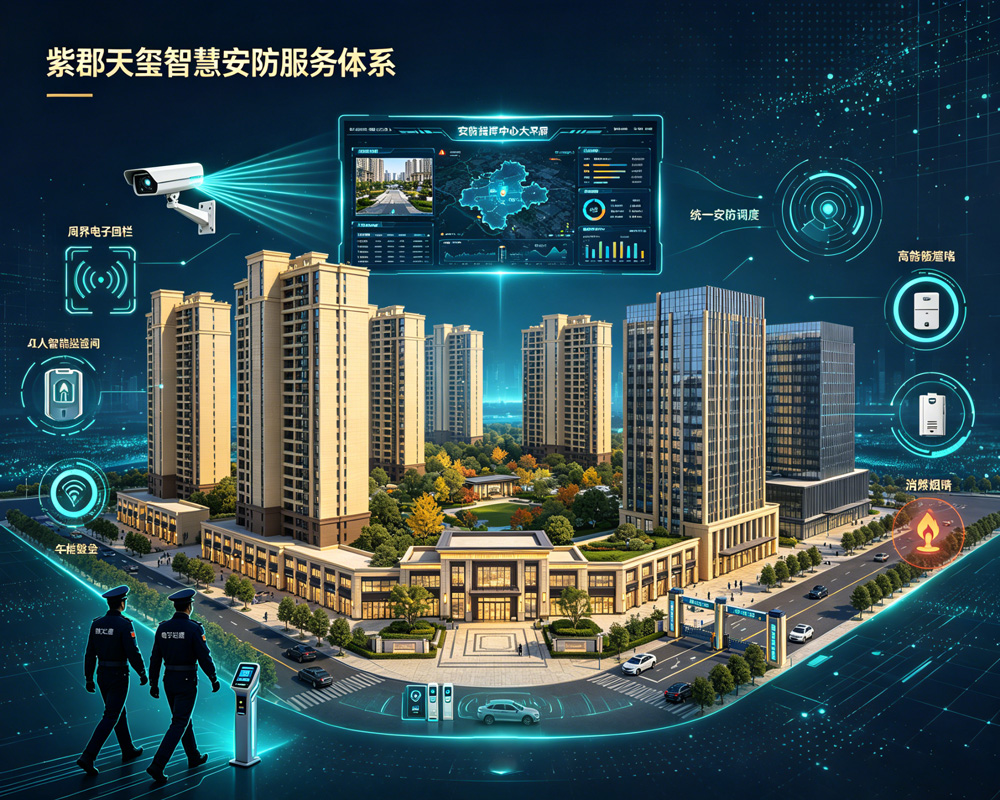
Leveraging its weak-current intelligent system integration capabilities, Yunzhi Company provides unified integration of electronic patrol systems with video surveillance, access control, and alarm systems, enabling patrol check-ins linked with video capture and patrol exceptions linked with alarm push notifications. This has been implemented in security management for projects such as Zijun Tianxi, helping customers achieve digitalized, standardized, and traceable security management.