




I. Project Background and Requirements
In July 2026, the Ministry of Housing and Urban-Rural Development issued the "List of Replicable Experience Practices for Complete Community Construction," incorporating smart communities into the core dimensions of complete community construction. Since the beginning of the "15th Five-Year Plan," the smart community industry has entered a critical period of standardized and large-scale development, with community intelligent construction, age-friendly renovation, smart security, and digital services incorporated into key livelihood projects and urban construction assessment systems. Cities such as Shanghai have explicitly promoted quality and efficiency improvement in the property management industry, established a "one object, one code" identification system for shared property facilities and equipment, and promoted the construction of smart property service platforms integrating government supervision, owner services, and comprehensive community governance.
Yulin City Yuyang District is in a critical period of urban quality improvement and community upgrading and renovation. Traditional communities face pain points such as security management relying on manual labor, delayed detection of facility and equipment failures, low property service efficiency, inconvenience for residents in handling affairs, and single means of community governance. Shaanxi Yunong Yunzhi Intelligent Technology Co., Ltd., relying on the industrial resources of Yunong Technology Group (stock code: 834487), has weak current intelligent system integration capabilities and a technology foundation in AI, IoT, and big data. It has cooperated with Xingtai Company to build the "Zijun Tianxi Smart Digital Community" (total investment of 41 million yuan), covering weak current intelligence, lighting fixture assembly, signage installation, etc., and can provide an integrated solution from planning and design to construction and operation and maintenance for the construction of smart communities in Yuyang District.
II. Overall Architecture
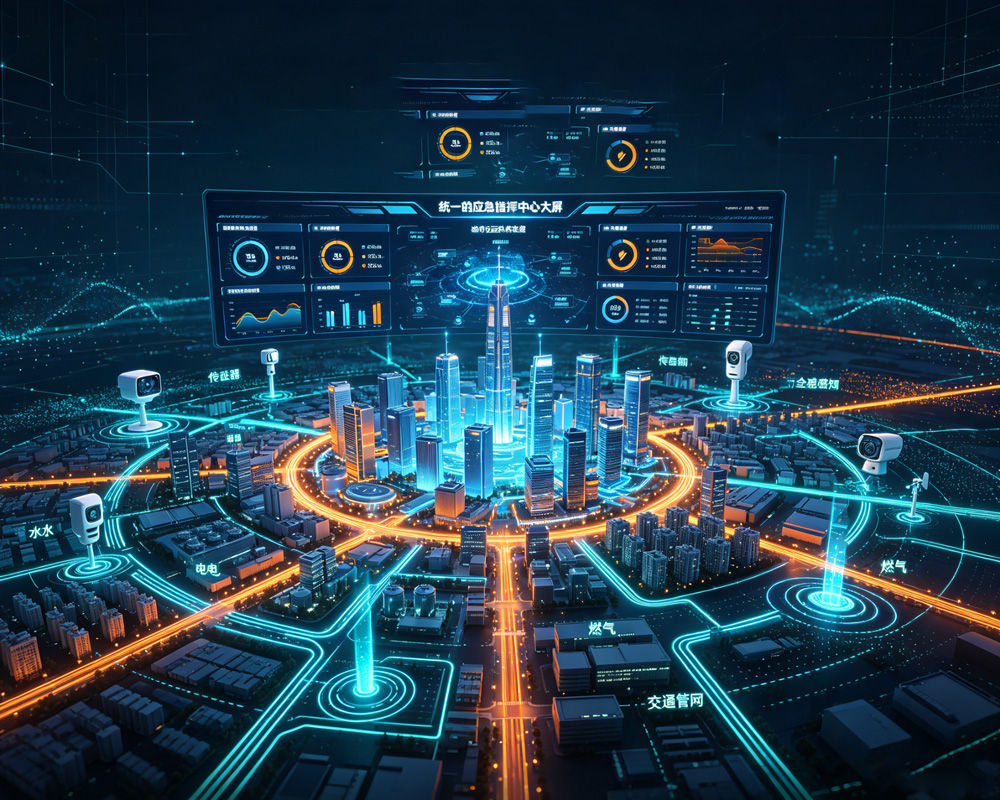
The solution adopts a four-layer architecture of "perception layer-network layer-platform layer-application layer." The perception layer deploys devices such as facial recognition access control, smart cameras, elevator IoT terminals, water and electricity meters, environmental sensors, and smart barriers to achieve full-element perception of people, vehicles, objects, and facilities in the community; the network layer relies on all-optical networks and the integration of 5G+WiFi6 dual networks to ensure high-speed and stable coverage across the entire community; the platform layer builds a unified community digital foundation and smart property middle platform, integrates multi-source data such as security, property, convenience services, and governance, and provides basic capabilities such as data governance, AI model training, device control, and security assurance; the application layer serves three types of entities: property management, residents, and community managers, providing scenario-based services such as smart security, smart property, convenience services, and community governance.
III. Core Application Modules
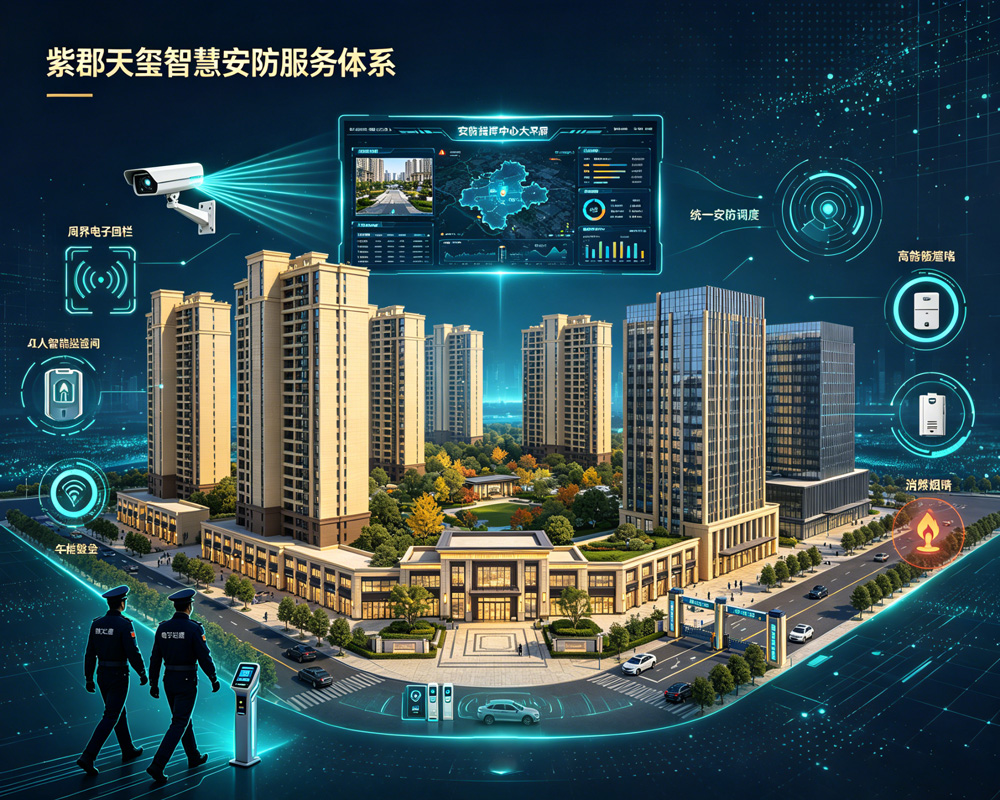
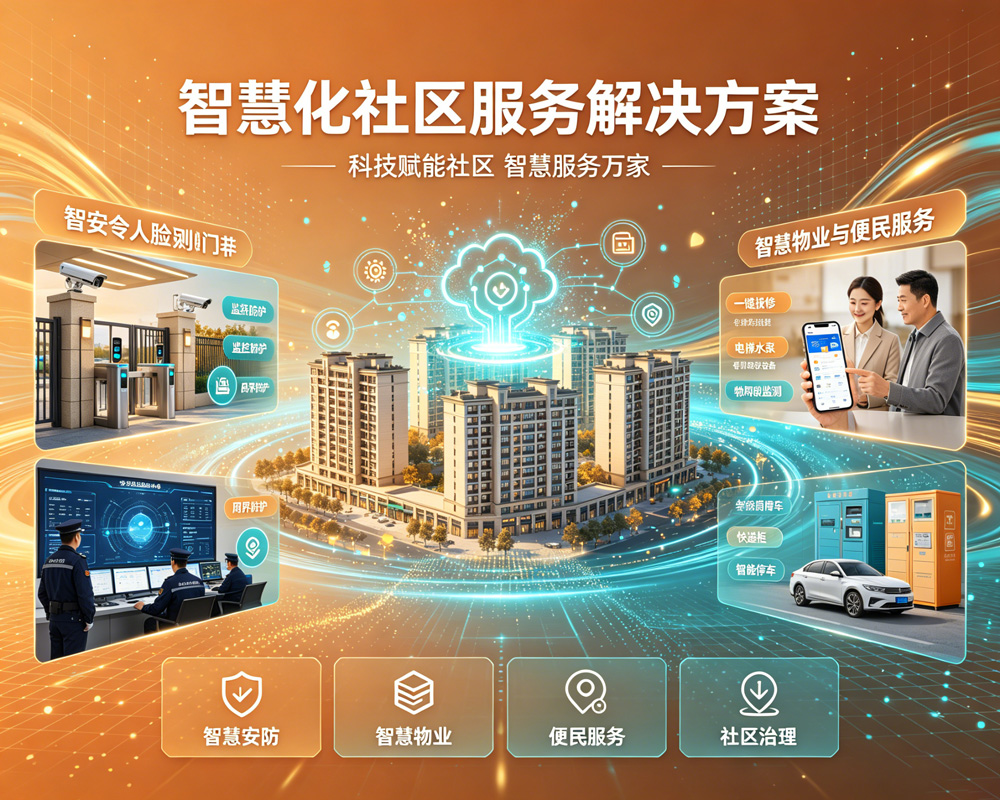
(1) Smart security and access management. Build a community-wide intelligent security system, relying on AI video analysis technology to achieve functions such as facial recognition access control, perimeter intrusion detection, high-altitude falling object identification, early warning of electric bikes entering elevators, and detection of fire lane occupation. Abnormal events are automatically warned and pushed to property security personnel; facial recognition access systems and smart barriers are deployed at community entrances and exits, supporting contactless passage for owners, visitor appointment registration, and automatic vehicle identification and payment, improving passage efficiency and safety levels; integrate subsystems such as video surveillance, access control, intercom, and alarms to establish a unified security dispatch platform. When an alarm occurs, it automatically links pop-up windows and precise positioning to improve emergency response efficiency.
(2) Smart property and equipment operation and maintenance. Carry out IoT transformation of various equipment in the community, such as elevators, water pumps, streetlights, distribution boxes, and fire protection facilities, establish a "one object, one code" identification system, monitor equipment operating status and energy consumption in real time, predict equipment failures in advance based on AI algorithms, and automatically dispatch maintenance work orders, reducing equipment failure rates and operation and maintenance costs; build a smart property management platform to realize full-process online management of work orders such as cleaning, security, and maintenance, and integrate personnel attendance, task dispatch, progress tracking, and performance evaluation; deploy an intelligent parking management system that supports parking space guidance, contactless payment, and online monthly card processing, improving parking management efficiency.
(3) Community convenience service platform. Develop a community service APP and mini-program to provide residents with online payment services for property fees, water and electricity bills, parking fees, etc., support one-click photo upload of repair information, and after the property management receives the order, promptly arrange personnel for on-site repairs and track the progress throughout the process, making it convenient for residents to supervise; integrate commercial resources around the community to provide convenience services such as online shopping, domestic services, express delivery collection, and community group buying, creating a 15-minute convenient living circle; build supporting community information display screens and announcement push systems to promptly release community notices, activity information, and warning reminders, improving the efficiency of community information reach. For special groups such as the elderly, provide age-friendly interfaces and one-click call services to enhance the inclusiveness of community services.
(4) Smart community governance. Build a community grid management platform, divide the community into several grids, equip grid workers, and realize full-element grid management of people, places, matters, objects, and organizations; residents can report community problems and suggestions through the APP, and the platform automatically assigns them to the corresponding grid workers or functional departments, with disposal results fed back in real time, forming a closed loop of "report-assign-dispose-feedback"; establish a community data dashboard to visually display data such as population structure, equipment operation, property services, and security incidents, providing community managers with precise decision-making support; connect with superior platforms such as subdistricts, public security, and civil affairs to realize data interconnection and collaborative governance.
IV. Implementation Path
The project is advanced in three phases: Phase I (2026) takes the Zijun Tianxi Smart Digital Community as a benchmark, improves the smart security, smart property, and convenience service platforms, and forms a replicable demonstration model; Phase II (2027-2028) expands coverage, completes the smart upgrading of major newly built communities and old community renovations in Yuyang District, builds a regional smart community management platform, and realizes unified management and data aggregation of multiple communities; Phase III (2029-2030) deepens AI applications and community operations, builds a smart community ecosystem, promotes value-added operation of community services, and helps Yuyang District lead the city in smart community construction.
V. Expected Outcomes
After the solution is implemented, the level of smart community construction in Yuyang District will be significantly improved: 100% coverage of key community security areas, abnormal event alert response time reduced by more than 50%, and a significant decrease in safety incident rates; equipment failure rate reduced by 30%, property operation and maintenance costs reduced by 20%, and maintenance response time shortened by 40%; resident online payment rate reaching over 90%, repair handling satisfaction improved to over 95%, and community affairs achieving "at most one visit."
At the same time, the project will drive the clustering of smart property, intelligent hardware, community services, and other industries, create employment opportunities, enhance residents' sense of happiness and security, establish a regional benchmark for smart community construction, and contribute to Yulin's urban quality improvement and modernization of grassroots governance.